
TCM Journal
What Is Dampness in TCM? Bloating, Heaviness, and Everyday Habits Explained
Why dampness is such a popular TCM keyword
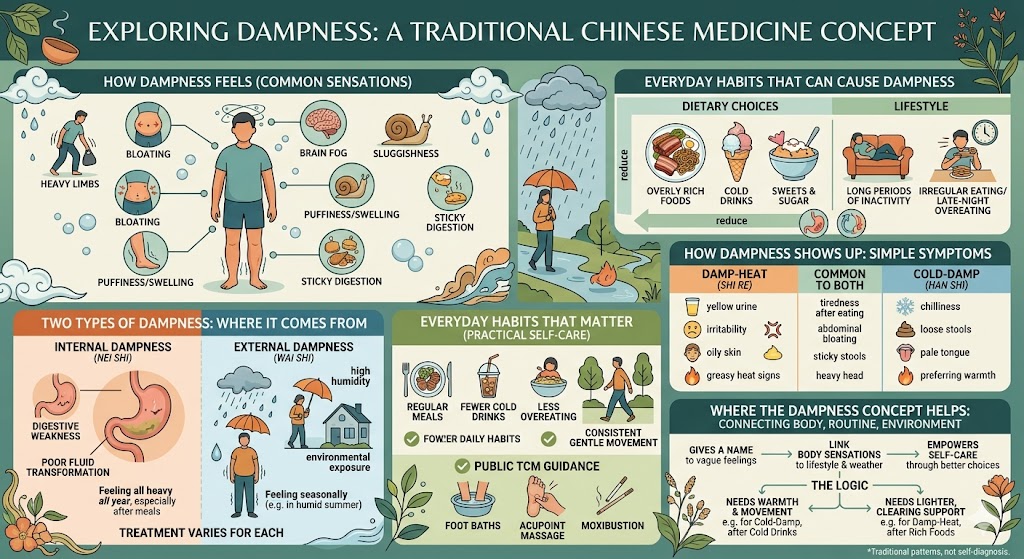
Among English-language TCM search terms, dampness is one of the most memorable because it gives a name to a feeling many people already recognize. They may not say they have dampness, but they often describe heaviness, puffiness, sluggishness, bloating, brain fog, sticky digestion, or a sense that their body is not clearing things properly.
In Traditional Chinese Medicine, dampness is not a modern disease label. It is a pattern concept. It can arise from outside factors such as humid weather and wet environments, and from inside factors such as weakened digestive transformation, irregular eating, cold drinks, overly rich foods, or long periods of inactivity.
Internal dampness and external dampness
Chinese official health education often distinguishes internal dampness from external dampness. Internal dampness is linked with digestive weakness and disordered fluid transformation. External dampness is linked with climate, persistent humidity, getting wet, damp living conditions, or environmental exposure.
This distinction matters because treatment and self-care are not always the same. If a person feels heavy every summer in humid weather, seasonal adaptation matters. If a person feels heavy all year and notices it most after iced drinks, sugar, alcohol, or irregular meals, then digestive support and food habits matter more.
How dampness shows up in daily life
When people read TCM descriptions of dampness, they often recognize themselves in simple symptoms: heavy limbs, tiredness after eating, abdominal bloating, low appetite, sticky stools, swelling, oily skin, and a foggy head. Some descriptions also distinguish damp-heat from cold-damp. Damp-heat may show up with yellow urine, irritability, or greasy heat signs; cold-damp may show up with chilliness, loose stools, and a preference for warmth.
A useful article should present these as traditional observations rather than a self-diagnosis tool. The value of the concept is that it helps readers connect body sensations with their routines and environment.
Everyday habits that matter more than people expect
Official TCM education repeatedly comes back to practical habits. People are encouraged to reduce excessive sweet, greasy, overly cold, or irregular eating patterns if they notice heaviness. Gentle movement is also emphasized, because a body that never moves tends to feel more stagnant and heavy.
Some public Chinese medicine guidance also discusses external methods such as foot baths, acupoint massage, and moxibustion, but the everyday habits remain the most transferable for an English blog audience: regular meals, fewer cold drinks, less late-night overeating, and movement that is consistent rather than extreme.
Where this idea helps in daily life
Dampness is a useful concept because it gives people a language for patterns that can otherwise feel vague or frustrating. Official articles often connect it with food habits, movement, weather, and the body’s ability to transform fluids well. What matters most in explanation is the logic: some situations are described as needing warmth and movement, while others are described as needing lighter, clearing support.
That makes dampness a strong educational keyword for an information-focused website. It is searchable, closely linked to digestion and lifestyle, and easy to explore without turning the article into a sales page.
Sources in Chinese
Reading note
Education before recommendation.
This article is written as general TCM education and daily lifestyle guidance. It is not medical advice or diagnosis.